

Vehicle-to-Home (V2H) and Vehicle-to-Grid (V2G) technologies are generating significant attention in the energy sector, but what are their real-world implications?
What is V2H (Vehicle-to-Home)?
V2H, or Vehicle-to-Home, enables the flow of electricity between an electric vehicle (EV) and a home using a bi-directional charger. This system allows EV owners to charge their vehicles during off-peak times when electricity is cheaper and cleaner, then use the stored energy from the car's battery to power their home. Essentially, the EV's battery acts as a backup energy storage unit, powering household appliances, lighting, heating, and more.
By managing energy flow intelligently, V2H creates a self-sufficient, sustainable energy ecosystem. Homeowners can reduce their reliance on the grid, cut energy costs, and make the most of cleaner, renewable electricity. This process empowers consumers to both lower their bills and help stabilize grid demand.
In this article, we mainly discuss V2H. For more information about V2G, please refer to Explanation on V2G (Vehicle to Grid)
Key Benefits of V2H
Reduced Peak Hour Consumption: By using stored energy during periods of high demand, V2H helps alleviate stress on the electrical grid.
Significant Savings: Homeowners can save up to £200 per month by optimizing the use of their EV's stored power.
Environmental Benefits: V2H reduces household carbon emissions and contributes to the transition to a more sustainable, renewable-powered future.

Why V2G and V2H Matter for the Energy Transition
Electric vehicles are already playing a major role in reducing transportation-related carbon emissions. A study by the International Council on Clean Transportation reveals that electric cars have lifecycle emissions up to 70% lower than their gasoline counterparts, and this figure is expected to improve to 80% by 2030, as the electricity mix continues to evolve.
However, EVs hold even more potential when they're used as bidirectional power sources. The main challenge with renewable energy sources like wind and solar is their variability-power generation can be inconsistent, leading to grid imbalances. V2G and V2H help address these challenges by allowing stored energy to flow back to the grid or into homes during times of low supply or high demand, making the overall energy system more resilient and sustainable.
Given that EVs typically sit idle for 23 hours a day, V2H and V2G allow this otherwise unused capacity to support the grid or provide power to homes, making the most of the energy stored in these vehicles. These technologies provide an effective way to manage renewable energy fluctuations, ensuring a more stable and efficient electricity system.
V2G vs. V2H: What's the Difference?
V2H (Vehicle-to-Home):
In the V2H model, an electric vehicle charges and discharges energy to and from a home. The vehicle's battery acts like a storage device, helping the homeowner achieve greater energy independence. This is a relatively straightforward setup, primarily used for self-sufficiency and reducing energy costs.
V2G (Vehicle-to-Grid):
V2G is a more complex system where multiple EVs are connected to the grid, both drawing and feeding energy back into it. This setup requires careful management of battery capacities, mobility patterns, electricity prices, and grid regulations. V2G's main goal is to support the grid by providing services like frequency regulation, balancing demand, and offering reserves. The system operates on a larger scale, with multiple vehicles contributing to grid stability.

Benefits of V2H and V2G for Residential and Commercial Use
Optimizing Home Energy with V2H:
V2H technology is a game-changer for home energy management. When connected to the grid, an EV can charge during off-peak hours, storing clean energy to power the home later. This reduces reliance on traditional energy sources and offers households greater energy autonomy. The ability to use an EV as a backup power supply during peak demand or outages ensures a more reliable energy system for homeowners.
Transforming Commercial Operations with V2G:
V2G stations in commercial settings allow businesses to contribute to grid stability. During peak demand, businesses can discharge energy stored in their EVs back to the grid, helping to balance supply and demand. This reduces pressure on the grid while also offering businesses an opportunity to earn money by providing grid services. Additionally, businesses that use V2G can reduce their energy costs and improve sustainability.
Enhancing Energy Security and Cost Efficiency:
Both residential and commercial installations benefit from the increased energy security provided by V2G and V2H systems. These technologies ensure that power is available when needed most, even during grid failures or peak demand periods. On top of that, they contribute to financial savings through optimized energy use, making them both environmentally and economically attractive.
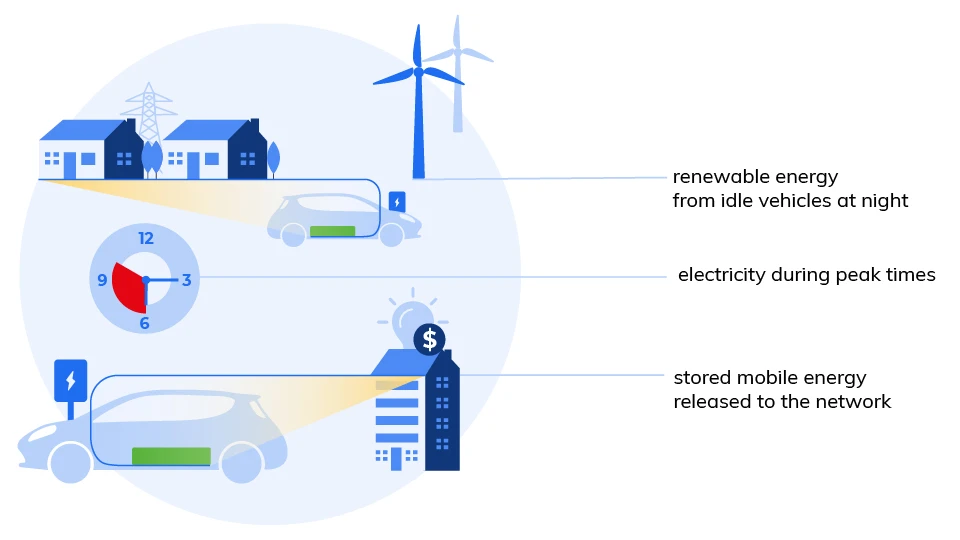
Bidirectional Charging: V2G, V2H, and V2L-What's the Difference?
Bidirectional charging refers to the ability to charge and discharge energy between an EV and either the home or the grid. This differs from traditional chargers that only allow for one-way energy flow (from the grid to the vehicle).
V2G (Vehicle-to-Grid): In V2G systems, the electric vehicle sends energy back to the grid, helping to balance supply and demand on a large scale.
V2H (Vehicle-to-Home): V2H enables energy to flow from the EV to the home, providing backup power or helping to reduce grid dependency.
V2L (Vehicle-to-Load): This is a simpler application of bidirectional charging. V2L allows an EV to supply power directly to appliances, tools, or devices (e.g., refrigerators, TVs, or power tools) via onboard power outlets or adapters (refer below picture).

Do All Electric Vehicles Support Bidirectional Charging?
Currently, not all EVs are compatible with bidirectional charging. Some vehicles that support this functionality include the Nissan Leaf (2013 and newer), Ford F-150 Lightning, Hyundai Ioniq 5, Hyundai Ioniq 6, Kia EV6, and Genesis GV60. However, bidirectional charging is still an optional feature on most models, rather than a standard one.
The Road Ahead: Overcoming Challenges and Scaling Up V2G and V2H
To fully unlock the potential of V2H and V2G, several challenges must be addressed, including:
Standardization: The development of standardized protocols for bidirectional charging is essential to ensure interoperability between vehicles, chargers, and the grid.
Regulatory Frameworks: Governments and regulators need to create policies that incentivize V2H and V2G adoption while ensuring the grid remains stable.
Technological Advancements: Further improvements in battery technology, grid infrastructure, and digital solutions will help make V2G and V2H systems more efficient, scalable, and accessible.
Conclusion
V2G and V2H technologies represent a significant step forward in the quest for a smarter, more sustainable energy future. By leveraging the vast energy storage potential of electric vehicles, we can enhance grid stability, reduce reliance on fossil fuels, and offer both economic and environmental benefits to consumers and businesses alike. As the world continues to transition to renewable energy, V2H and V2G will play a pivotal role in shaping the future of energy consumption, making it cleaner, more efficient, and more resilient.
Hot Tags: v2H, v2g, v2l, vehicle to home, ehicle to grid, ehicle to load
Related article: What is V2G, V2H, V2L, V2V ?
Related article: Explanation on V2G (Vehicle to Grid)
Related product: V2G Charger 15KW 22KW, V2G Charger 30KW 44KW