|
Items |
Product |
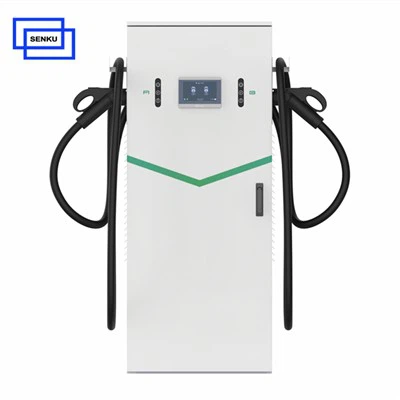
300KW 350KW 360KW CCS Public Charging Stations |
|
AC input Data |
Input |
400V AC +/-15%, Rated 380VAC; 3 phase+ neutral + PE; 45-65Hz |
|
DC Output Data |
Output |
300KW / 320KW /350KW /360KW / 200-1000V DC / 200A (250A/ 300A /400A/ 500A cable optional) |
|
Output Plugs |
CS2 / CCS1 / GBT / NACS; cable length 5M or customized |
|
|
Communication |
Internet |
Ethernet/WIFI/4G communication |
|
Protocol |
OCPP1.6 |
|
|
Environmental Data |
Operating |
-30℃to +50℃;5% ~ 95% no condensation;≤2000m |
|
IP Level |
IP54 (Indoor/Outdoor) |
Ideal locations for DC charging stations
Public Charging Stations
Optimal sites for DC public charging stations are those with high traffic and frequent usage, as these chargers can often recharge an EV in under 30 minutes. Ideal locations include major highways, service areas, and gas stations. Additionally, places where drivers typically spend 30 to 60 minutes, like grocery stores and malls, are also suitable for DC chargers.
These stations are also valuable for commercial fleet operators who require constant vehicle use and for charging heavy-duty electric vehicles, such as trucks or equipment for construction sites.
The decision to make a DC charging station publicly accessible or restricted to private use depends on the operator of the charging point.

What is a DC charging station?
EV charging
Direct current (DC) is the type of power stored in a vehicle's battery, similar to any conventional battery. Standard AC charging stations use alternating current (AC) with a maximum output of up to 22 kilowatts (kW). In this case, the AC is converted to DC within the vehicle using an on-board charger, which results in longer charging times.
In contrast, a DC charging station delivers direct current directly to the vehicle, significantly improving efficiency and reducing charging duration. The conversion from AC to DC occurs within the charging station itself, eliminating losses typically associated with the conversion process inside the vehicle.

What Types of DC charging stations?
Senku Public Charging Stations
The Combined Charging System (CCS) serves as the standard for DC charging in Europe, while the CHAdeMO standard, primarily found in Nissan and Mitsubishi vehicles, is from Japan.
In China, the GBT connector is the standard for electric cars, and Tesla vehicles utilize their own proprietary connectors.
One of the key benefits of DC charging stations is their much higher output compared to AC stations. While AC chargers typically provide power ranging from 3.7 kW to 22 kW, DC chargers can achieve capacities of up to 600 kW. This capability allows DC chargers to fully recharge an electric vehicle in just minutes, rather than taking several hours.

What is HPC EV charger?
HPC EV Charging
High Power Charging (HPC) represents a cutting-edge technology in electric vehicle charging that enables extremely fast power delivery. This method utilizes direct current (DC) to provide charging capacities exceeding 100 kilowatts (kW).
CCS Public Charging Stations with a power output of 600 kW are now available, and initial models nearing the megawatt (MW) threshold are under development. The MCS will primarily cater to electric trucks and buses, facilitating the electrification of heavy-duty vehicles.
Not all electric vehicles are compatible with high-power charging (HPC), but as this technology becomes more significant, an increasing number of EV models are equipped to support it.
Ultra-fast charging significantly reduces the time needed to charge a single vehicle while enhancing the overall efficiency of the charging station.
Typically, electric vehicles can reach 80% state of charge (SoC) within 20 to 30 minutes at an HPC station. However, reaching a full charge may take an additional 20 minutes due to the battery management system's complexity. For most situations, charging to 80% is adequate.
To achieve a driving range of 100 km, a few minutes of charging is generally sufficient, varying by vehicle model. For instance, under optimal conditions, the Porsche Taycan requires just 5 minutes and 30 seconds to charge.


Hot Tags: 300kw 350kw 360kw ccs public charging stations, 300kw 350kw 360kw ccs public charging stations suppliers, manufacturers, factory, Electric Car Charging Infrastructure, Charging Station, EV Station, EV Charging Systems