|
Specification |
Product Name |
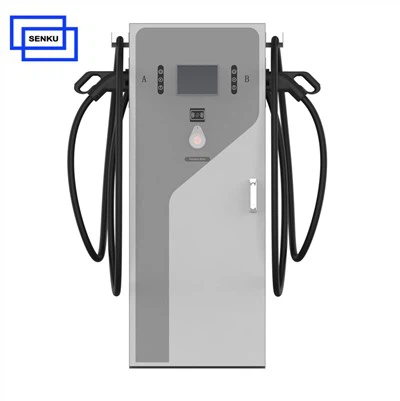
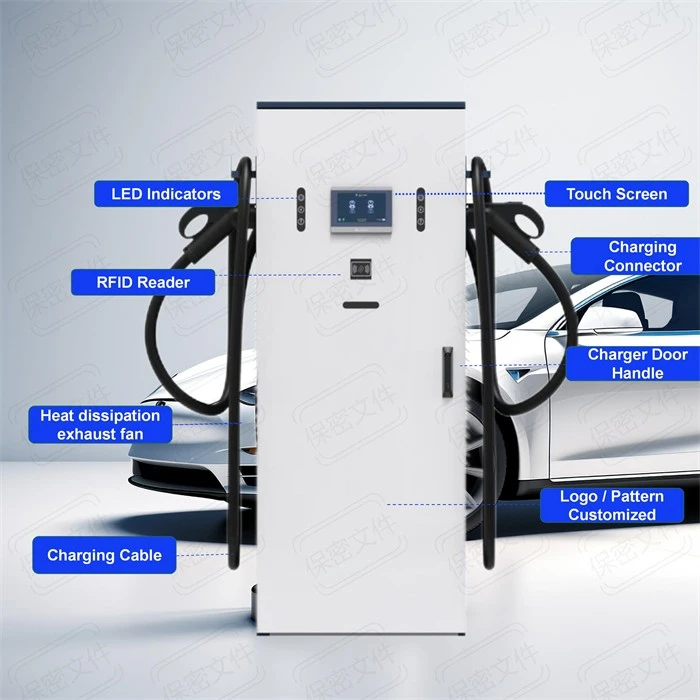
140KW CCS1 EV Charger For Charging Electric Cars On The Road |
|
AC input Parameter |
Rated Input |
304~456VAC, Rated 380VAC; 3 phase+ neutral + PE; 45-65Hz |
|
DC Output Parameter |
Rated Output |
140KW / 50-1000V DC / 200A |
|
Output Connectors |
CS2 / CCS1 /CHADEMO / GBT optional with 5M cable |
|
|
Communication |
Charger v.s. Backend |
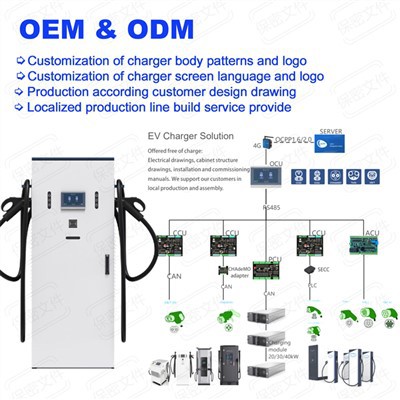
Ethernet / WIFI / 4G communication |
|
Communicate Protocol |
OCPP1.6 / 2.0 |
As more consumers consider buying electric vehicles, charging time remains a significant factor in their decision-making process. Currently, the quickest way to charge an EV is through high-power direct current (DC) fast charging.

Difference Between AC and DC Chargers
AC (Alternating Current) chargers, which include Level 1 and Level 2 options, provide slower charging rates as they rely on the typical electricity flow from the power grid, like what is used in homes. In North America, AC charging operates under the SAE J1772 standard, delivering between 12A and 80A, while other regions follow standards such as IEC 62196 or GB/T 20234. When using an AC charger at home, the EV's onboard charger converts the AC power into DC to charge the vehicle's battery.
On the other hand, **DC fast chargers** are primarily used at public charging stations. These stations convert AC power from the grid into DC before delivering it directly to the EV's battery, bypassing the need for onboard conversion. Under the J1772 standard, DC charging has two levels: DC Level 1 offers charging rates up to 80A, and DC Level 2 (often called Level 3) provides rates up to 500A.
The key difference lies in the charging time. AC Level 1 charging, at 12A and 120VAC, provides around 1.4 kW of power, while AC Level 2, at 80A and 240V, offers up to 19.2 kW. Even at its highest, AC charging would take roughly five to six hours to fully charge a 100 kWh battery pack. In contrast, DC fast charging at 500A and 400VDC can charge the same battery in about 30 minutes. Charging times are expected to decrease further with advancements in battery technology, the adoption of 800V systems, and improvements in charging infrastructure.


Hot Tags: 140kw ccs1 ev charger for charging electric cars on the road, 140kw ccs1 ev charger for charging electric cars on the road suppliers, manufacturers, factory, EV Station, Electric Car Charging Infrastructure, Charging Station, EV Charging Systems