|
Items |
Product |
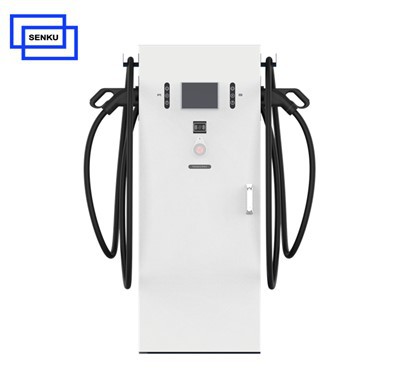
Combo CCS2 CCS1 50Kw Charging Station |
|
AC input Data |
Input |
304~456VAC, Rated 380VAC; 3 phase+ neutral + PE; 45-65Hz |
|
DC Output Data |
Output |
60KW / 50-1000V DC / 200A |
|
Output Plugs |
CS2 / CCS1 /CHADEMO / GBT; 5M cable length or customized |
|
|
Communication |
Internet |
Ethernet/WIFI/4G communication |
|
Protocol |
OCPP1.6 |
|
|
Environmental Data |
Operating |
-30℃to +50℃; 5% ~ 95% no condensation; ≤2000m |
|
IP Level |
IP54 (Indoor/Outdoor) |
|
|
Cooling Method |
Fan Cooling |
|
|
Protection |
Over/Under voltage protection, Overload protection, Short circuit protection, Over/Under temperature protection, Grounding protection, Surge protection, Leakage protection... |
|

Main Features
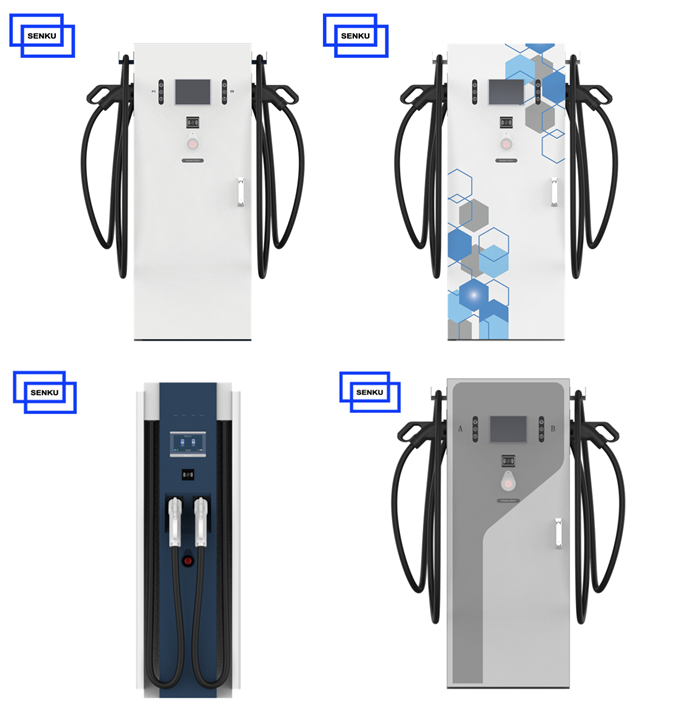
The Combo CCS2 CCS1 50Kw Charging Station can be installed in various destination scenarios, such as council parking lots, leisure centers, supermarkets, and various locations on streets - all of which make it easy to find electric vehicle charging stations.
Charging stations can also be installed at highway service stations or along major roads, or at retail parks and other popular facilities such as Starbucks and McDonald's; In fact, many restaurants and hotels have a demand for installing electric vehicle charging stations in their parking lots.
Many gas station front yards are also suitable for adding electric vehicle charging stations.
How to Choose the Right DC Charging Solution for Your Business?
As electric vehicles (EVs) gain global popularity, the demand for fast and reliable charging solutions is on the rise. Many businesses are now seeking scalable and efficient ways to offer EV charging at their locations. One optimal solution is DC fast charging, known for its ability to charge vehicles in just minutes.
Which businesses benefit most from DC charging?
DC charging is ideal for two main business scenarios: **commercial charging** and **fleet operations**. Commercial charging refers to businesses that want to provide charging services for their customers, while fleet operations focus on ensuring that fleets-such as delivery vans, buses, or trucks-remain charged and ready to operate.
When offering fast charging to your customers, consider these key factors:
1. How long do customers stay at your location?
This is one of the most critical questions when selecting a DC charging solution. Customers seeking quick charging are often willing to go out of their way for convenience. It's essential to gauge how long they typically stay and how quickly they need their vehicles charged. For example, if you operate a highway gas station, customers might arrive with a low battery charge and want to quickly recharge and get back on the road. In such cases, DC chargers with 180 kW or more are ideal.
In contrast, if you run a retail store or restaurant where people tend to stay for an hour or longer, lower-powered chargers (like 50 kW or 90 kW) may be more suitable. These options allow for steady charging at a lower cost.
2. What types of EVs do your customers drive?
Understanding the types of electric vehicles your customers own is crucial. EVs vary in battery size and connector types (such as CCS2 or CHAdeMO). For instance, if your customer base includes electric buses with larger batteries, they will require higher power outputs for faster charging. However, if most of your customers drive smaller passenger EVs, ultra-fast chargers may not be necessary.
Additionally, while CCS2 is the dominant standard in Europe, there are still many CHAdeMO-equipped vehicles on the road. Offering both types of connectors can enhance accessibility and ensure you're catering to a broader audience.
3. Where should the charging stations be installed?
There are two main types of DC charging architectures: standalone and split systems.
Standalone units are all-in-one stations that include both the user interface and power supply. They are often bulkier but convenient for straightforward installations.
Split systems consist of two parts: a user unit for driver interaction and a separate power unit. These solutions can deliver more power and are ideal for locations requiring higher charging outputs. Your choice will depend on your business's layout and power needs.
4. What payment methods should you offer?
To maximize revenue, it's essential to offer a variety of payment options. These may include RFID cards, payment terminals, key fobs, or app-based payments. The ease of payment will impact how customers perceive the charging experience and may encourage repeat usage.
5. How can you future-proof your charging solution?
With the number of EVs on the road growing rapidly, it's important to consider how your charging infrastructure will evolve. Modular charging units offer flexibility by allowing you to start with a lower power output and expand as demand increases. These units also allow for additional features, such as more charging cables or payment options, giving your business the ability to adapt to future growth.
Conclusion
By addressing these key questions, businesses can select the right DC charging solution that meets both current and future needs, ensuring they stay ahead in the growing EV market. Modular, scalable, and versatile solutions will allow your business to evolve alongside the rising demand for fast, reliable EV charging.
Hot Tags: combo ccs2 ccs1 50kw charging station, combo ccs2 ccs1 50kw charging station suppliers, manufacturers, factory, Electric Car Charging Infrastructure, Charging Station, EV Station, EV Charging Systems