|
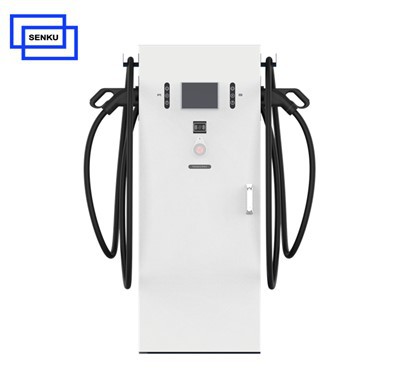
Product Name |
120KW 160KW 180KW Electric Car Charging Infrastructure |
|
Rated Input |
304~456VAC, Rated 380VAC; 3 phase+ neutral + PE; 45-65Hz |
|
Rated Output |
40KW /60KW /80KW /90KW / 200-1000V DC / 200A |
|
Output Connectors |
CS2 / CCS1 /CHADEMO / GBT |
|
Efficiency |
≥95% |
| Communication | OCPP 1.6 / OCPP 2.0 |
Main Features
-DC fast chargers (Level 3) with power output from 60kw to 180kW
-True simultaneously charging with the capability to charge two vehicles at the sametime
-Future-proof design with 1000 V max output
-Open Charge Point Protocol (0CPp) 1.6 and ls0 15118 compliant
-Start modes include plug-n-play, RFlD, OCPP and optional POS
-Ethernet, 4G and Wi-Fi connections available
-IP54 rated enclosure ideal for a wide range of locations and conditionsO
-CHAdeMO, NACS, GBT and CCS (type 1 or 2) connectors and charging cables
-Designed for easy installation and maintenance.
-Available with different power and voltage configurations for global markets

Benefits of Ultra-Fast EV Station
1) Increased Revenue Potential
Ultra-fast charging presents an opportunity for charging point operators (CPOs) to command premium prices due to its appeal among electric vehicle (EV) users. High-power charging (HPC) stations can achieve throughput levels that are two to three times greater than conventional fast chargers. This increase in efficiency can lead to significantly higher earnings during peak demand periods.
2) Reduced Charging Duration
HPC Electric Car Charging Infrastructure drastically cut down the time required for recharging compared to traditional AC chargers. Under ideal conditions, drivers can recharge their EVs in as little as 15 minutes, allowing them to conveniently enjoy nearby amenities, such as grabbing a coffee or a light meal, while they wait.
3) Enhanced Utilization Rates
With reduced charging times, more vehicles can use a single charger. For instance, while a standard AC charger may require up to eight hours for one complete session, an HPC Electric Car Charging Infrastructure can accommodate roughly 16 charging sessions within the same timeframe.


Where should ultra-fast chargers be installed?
Electric Car Charging Infrastructure
Key locations include busy transportation hubs and sites along highways. Installing HPC Electric Car Charging Infrastructures in these areas is crucial for alleviating the range anxiety that often affects drivers considering a switch from internal combustion engine (ICE) vehicles to electric vehicles (EVs).
Gas stations are also adapting to serve the emerging market of EV drivers, allowing them to charge as easily as they would refuel a traditional vehicle.
Retail chains can draw in new customers by providing charging options at their locations. Additionally, fleet operators can take advantage of HPC stations to offer their electric vehicle drivers quick and convenient charging solutions.

Market prospects of EV charging
Electric Car Charging Infrastructure
In Europe, the sale of new internal combustion engine (ICE) vehicles will be prohibited by 2035. Despite this deadline being about 13 years away, many consumers are already opting for electric vehicles (EVs) over ICEs. According to EY, 52% of potential car buyers are leaning towards either EVs or hybrids.
The expansion of the EV market is happening more rapidly than expected.
To effectively support this increase in EV sales, robust charging infrastructure is essential. The ability to charge conveniently is key to facilitating widespread adoption of electric vehicles.
Although range anxiety remains a major concern for consumers considering an EV, this fear is largely unfounded.
Current EU regulations recommend a maximum of 10 EVs per public charging point (PCP) to ensure adequate access to charging. Presently, the ratio is around 7.5. By 2030, this could rise to nearly 14 EVs per charging station.


More details about this 120KW 160KW 180KW Electric Car Charging Infrastructure, please contact our sale team, Thank you!
Hot Tags: 120kw 160kw 180kw electric car charging infrastructure, 120kw 160kw 180kw electric car charging infrastructure suppliers, manufacturers, factory, Charging Station, Electric Car Charging Infrastructure, EV Charging Systems, EV Station