


Brief Introduction
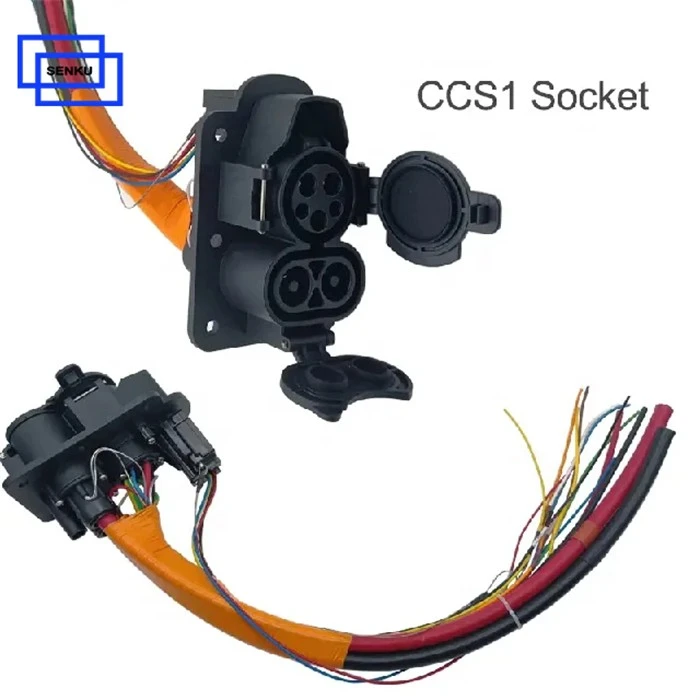
The CCS charging standard is an evolution of the J1772 (Type 1) interface, expanding on its original five-pin configuration by incorporating two additional pins specifically for DC fast charging. This seven-pin design includes three pins for AC charging, similar to J1772, along with two larger pins that manage high-power DC charging.


By integrating both AC and DC charging within a single connector, the CCS standard offers a wide range of charging possibilities. It supports slower Level 1 and Level 2 AC charging, ideal for home use or situations where charging time is not a concern.
For those needing a rapid charge while on the go, the UL List 150A J1772 CCS TYPE 1 EV Inlet can transition to DC fast charging (Level 3), which bypasses the vehicle's onboard charger and delivers a direct high-current charge to the battery. This significantly reduces charging time, making it more convenient for quick recharges during longer trips. The CCS standard's ability to switch between AC and DC charging depending on the situation highlights its versatility..

What is the Combined Charging System (CCS)?
The Combined Charging System (CCS) was developed to meet the demand for a more flexible charging solution. It was created primarily by major European and American automakers, including BMW, Daimler, Ford, and Volkswagen. The CCS standard combines both AC slow charging and DC fast charging into a single EV inlets, representing a major advancement in the functionality and convenience of EV charging systems.
Main Differences Between J1772 and CCS
The primary difference between J1772 and CCS lies in the range of charging speeds they support. The J1772 Type 1 connector supports Level 1 and Level 2 AC charging, making it suitable for both home and public charging stations. However, it does not support DC fast charging, which is particularly useful for quickly recharging during long trips.
In contrast, CCS covers the entire spectrum of charging speeds, including Level 1 and Level 2 AC charging as well as high-speed DC fast charging (Level 3). This allows vehicles equipped with CCS to benefit from rapid recharging at DC fast charging stations, while still being compatible with slower charging options when needed.
Another key distinction is in the physical design of the connectors. The J1772 connector is a single charging plug or EV inlet socket designed for both Level 1 and Level 2 AC charging, offering broad compatibility with most AC charging stations.
On the other hand, the CCS connector extends the J1772 design by adding two large pins at the bottom specifically for DC fast charging. This dual-purpose design enhances the connector's versatility, making it suitable for a variety of charging scenarios.
While these technical differences may seem minor, they significantly impact the user experience by influencing how and where EVs can be charged. Both J1772 and CCS are essential in expanding the EV charging network and promoting the adoption of electric vehicles.
For prospective EV buyers, understanding these differences is crucial for making informed decisions about charging capabilities and compatibility, tailored to their specific needs and preferences.
Hot Tags: ul list 150a j1772 ccs type 1 ev inlets, ul list 150a j1772 ccs type 1 ev inlets suppliers, manufacturers, factory, combo ccs1 ev charging inlet, j1772 plug, Sae j1772 type 1, socket type 1, evse plug, j1772 receptacle


